
Last updated November 15, 2026
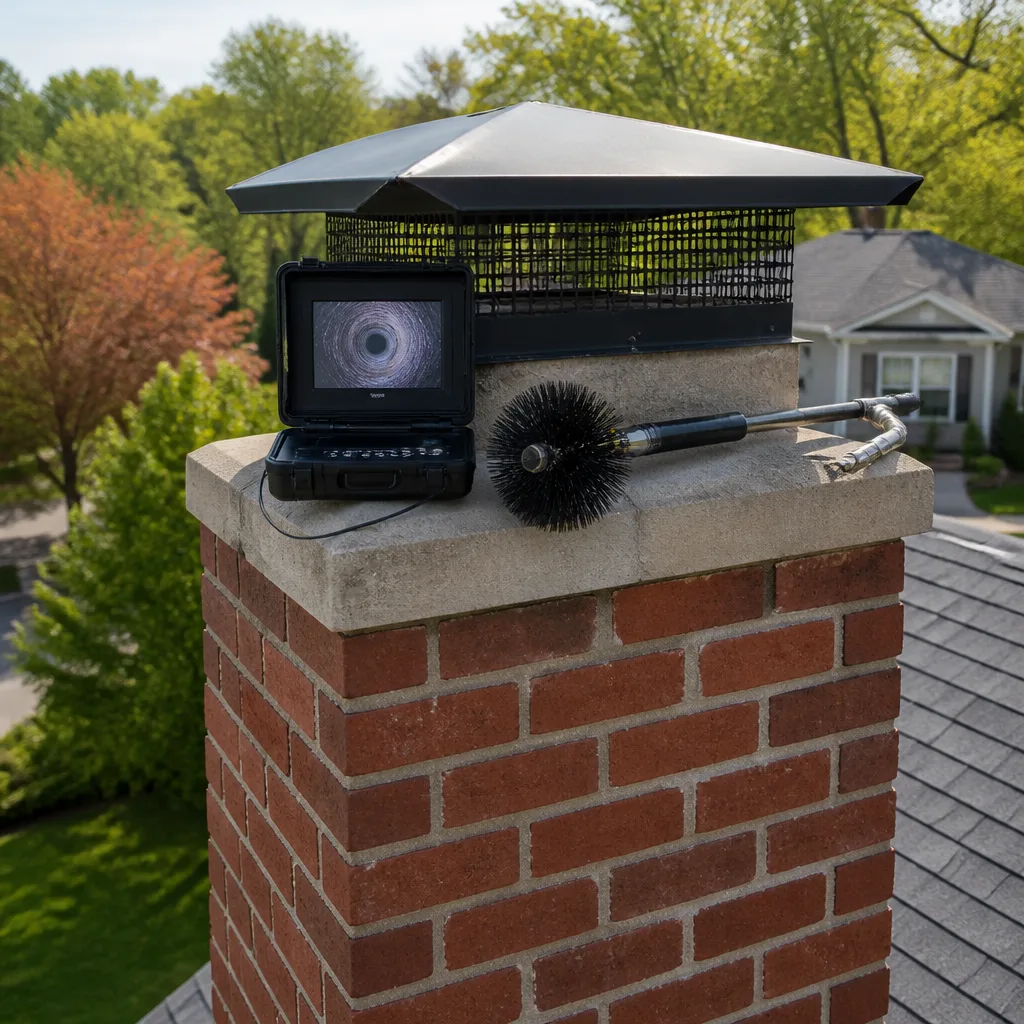 Sweep & inspection
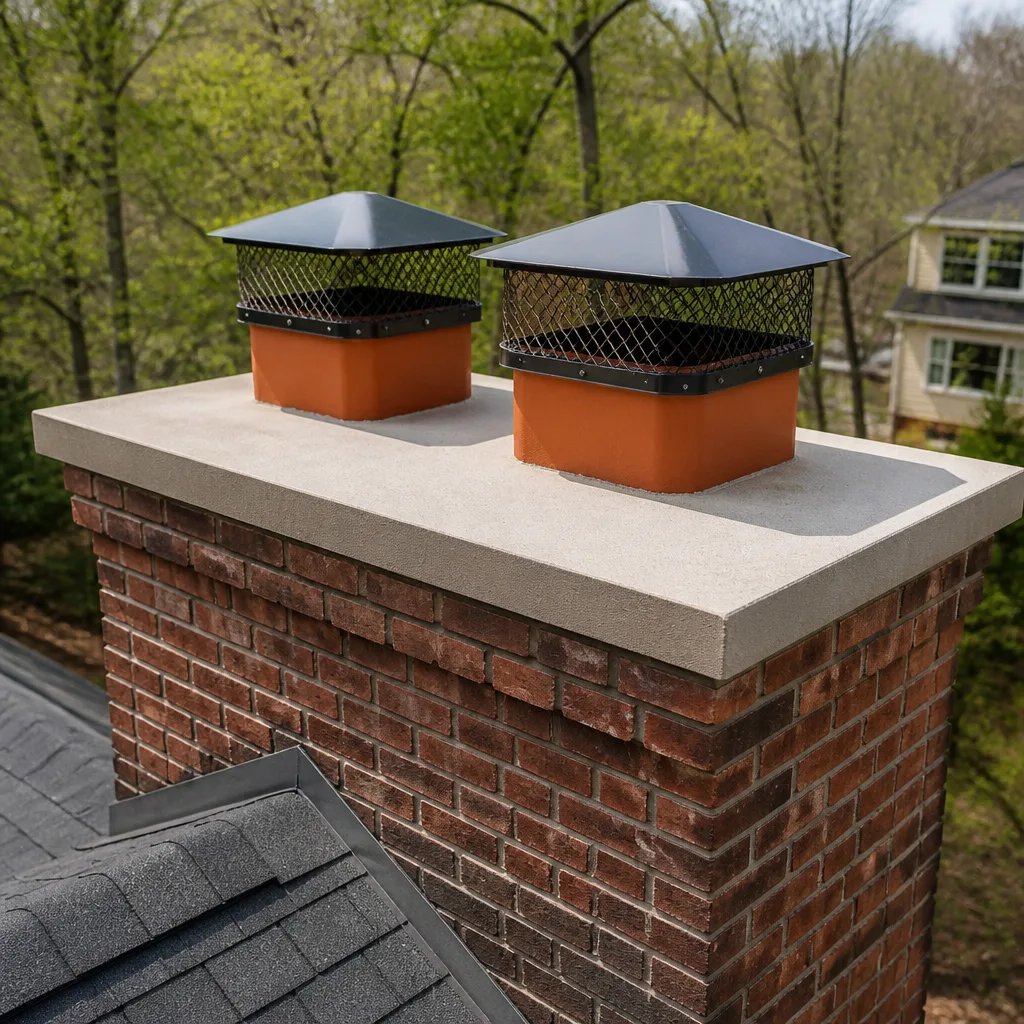 Caps & crowns
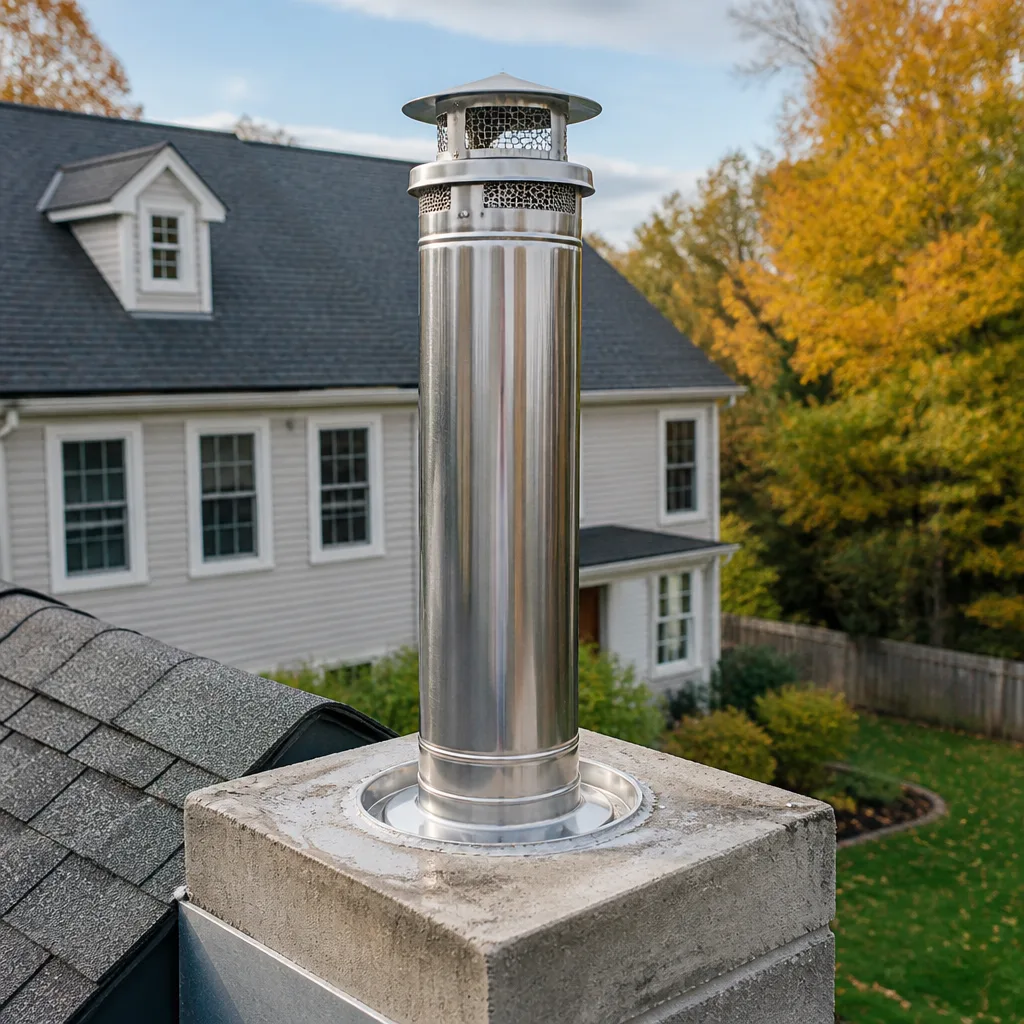 Flue relining
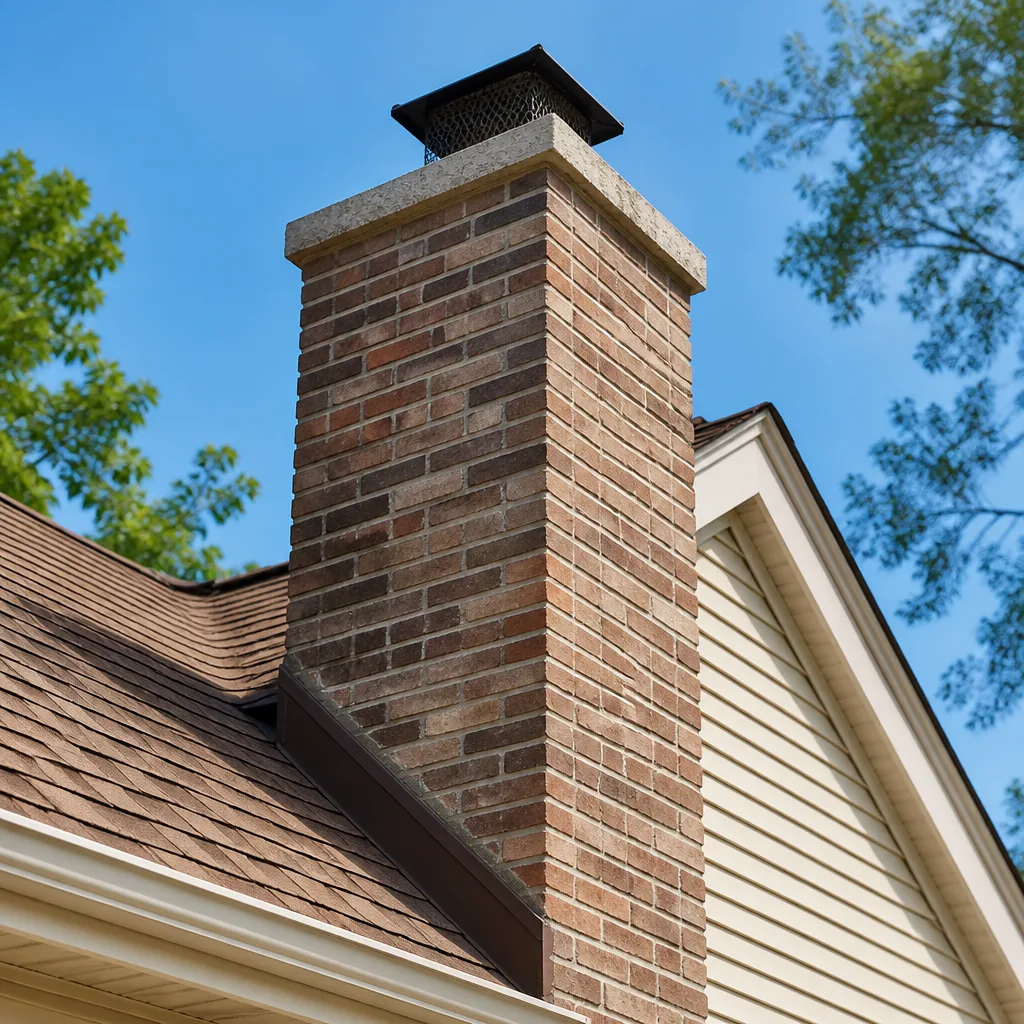 Masonry repair
 Gas fireplace service
Level 1 sweep and inspection to the NFPA 211 annual standard - flue, crown, cap, and flashing checked and photographed
Chimney sweep logs do not sweep chimneys. They loosen some creosote - which then falls where a brush and vacuum still have to collect it.
Chimney Cleaning Warning Signs: A Milwaukee Homeowner’s Reference Guide
A white stain on the outside of your chimney (efflorescence) looks like nothing more than a cosmetic problem. It’s actually a pressure-driven moisture signal. Water moves through brick, evaporates at the surface, and leaves mineral salts behind, and in Milwaukee that pattern often shows up one to two freeze-thaw cycles before a liner crack becomes visible from inside the flue. That gap between what you can see from the yard and what’s happening in the flue is where most chimney failures hide. This guide walks through the signals Milwaukee homeowners can read from the ground, what each one actually means, and which ones mean you should stop using the fireplace today.
Quick Answer
Watch for these chimney warning signs in Milwaukee: a strong creosote smell inside the living space, smoke rolling back into the room, visible fire at the top of the flue, or a rusted cap and crumbling crown outside. Any of the first three means stop using the fireplace and call for service before the next fire. Exterior signs like efflorescence, spalling brick, and mortar gaps usually mean a scheduled inspection within a few weeks, not an emergency. When in doubt, a sweep and camera inspection answers the question faster than guessing.
Styles & brands we work with
- Sweep & inspection
- Caps & crowns
- Flue relining
- Masonry repair
- Gas fireplace service
Table of Contents
- The Triage System: Signs That Mean “Stop Today” vs. “Schedule Service”
- Five Exterior Warning Signs You Can Read From the Yard
- Interior Signals: Draft Problems, Smoke Smell, and Damper Difficulty
- Why Some Warning Signs Only Appear in Certain Conditions
- Sounds and Smells That Get Misattributed to HVAC or Roof Problems
- Creosote, Glaze, and What Milwaukee’s Cold Season Does to Your Flue
- How to Document a Warning Sign Before It Disappears
- Common Mistakes to Avoid
The Triage System: Signs That Mean “Stop Today” vs. “Schedule Service”
Not every warning sign carries the same urgency, and treating them all the same is how homeowners either panic over cosmetic wear or ignore a real hazard. We sort chimney symptoms into two buckets: stop-use signals and schedule-service signals. Knowing which bucket you’re in takes about thirty seconds and saves you a lot of uncertainty.
Stop using the fireplace today and call for service:
- Smoke rolls back into the room instead of going up the flue.
- You can see flames at the top of the chimney or anywhere along the flue.
- A strong, sharp creosote smell fills living areas, especially on warm days after a fire.
- The damper won’t open fully, or the handle turns loosely with no effect.
- You hear a loud, rhythmic roar from the flue that doesn’t match the sound of a normal fire.
These signals mean the system is either blocked, backdrafting, or actively burning in the flue. Carbon monoxide from a blocked or damaged flue can enter the living space, and a chimney fire in the flue can spread to the surrounding structure. Stop burning and get a professional look before the next fire.
Schedule service within a few weeks:
- Efflorescence (white staining) on the exterior masonry.
- Crumbling mortar at joints, missing mortar at the crown, or hairline crown cracks.
- Spalling brick faces (brick flaking or peeling at the surface).
- A rusted or loose chimney cap.
- Slow draft, smoky smell in cold weather, or difficulty getting a fire to draw on the first attempt.
These are moisture, weather, and wear signals. They usually aren’t emergencies in the sense of “stop today,” but they can turn into one after a hard freeze. The pattern we see most in Milwaukee is one or two cold snaps that widen a crack that already existed. Catching it on the schedule side of the triage line is far cheaper than catching it on the other side. If you’re wondering which bucket your symptom belongs in, a chimney sweep with a camera inspection will give you the answer within the visit.
Five Exterior Warning Signs You Can Read From the Yard
Walk outside and look at your chimney with your feet on solid ground. Most of the highest-value information is visible without climbing a ladder, and it tells you a lot about what’s happening inside the flue.
- Efflorescence (white staining). As described at the top of this guide, this is a moisture signal, not a cosmetic one. It means water is moving through the masonry and evaporating at the surface. Left alone, that cycle of freeze, thaw, and expansion is what widens the small cracks that eventually let water reach the flue liner.
- Spalling brick. When brick faces flake or pop off, the brick has soaked up water and expanded internally. In a Milwaukee winter, the freeze-thaw cycle does the damage. Spalled brick on a chimney face usually means the same thing is happening behind the flue tile.
- Crown cracks. The crown is the sloped concrete cap at the very top of the chimney, designed to shed water away from the flue. Hairline cracks are common and worth watching. Larger cracks, or a crown that has crumbled at the edge, let water pool at the top of the flue.
- Rusted chimney cap. A chimney cap is the metal cover over the flue. Rust means the cap is failing, and a failing cap is where water and animals get in. A chimney repair visit can often replace a failed cap with a properly fitted one from Famco or Gelco at the same appointment as the sweep or inspection.
- Gaps at the mortar lines. Look at the joints between the brick courses. Missing or crumbling mortar at the shoulders and near the crown is where water starts to infiltrate. The faster it’s caught, the less likely it is that the flue liner has already been affected.
Reading these from the ground is a good first step, but the picture isn’t complete until someone looks from the top. When we come out for a service call, we check the crown, cap, flue tile, and mortar at the roofline as part of the visit. We name what we find and fix it with professional-grade materials, so the diagnosis doesn’t wait on a second contractor to schedule a repair.
Interior Signals: Draft Problems, Smoke Smell, and Damper Difficulty
Interior warning signs are easier to dismiss because they often look like user error. The fire just won’t draw, or there’s a faint smokiness in the living room in the morning. In our experience, these signals point to one of three things: a partially blocked flue, a smoke chamber that needs attention, or a liner that’s lost its integrity.
Draft problems. A chimney that drafts well when the fire is going but struggles on start-up is often a cold-flue issue, which is normal in Milwaukee winters. A chimney that used to draft well and no longer does has a physical change inside. That change might be a creosote buildup narrowing the flue, a bird or animal nest, or a partial collapse of tile or mortar from a damaged liner.
Smoke smell in cold weather. The smell of smoke in the house on a cold day with no fire going usually means pressure is pushing chimney air back into the living space. It can be as simple as negative pressure from kitchen or bath exhaust, or as serious as a crack in the flue liner letting smoke escape into the chimney chase. A camera inspection tells you which. We don’t recommend liner work on a hunch, and nothing is recommended without camera evidence you can see for yourself.
Damper difficulty. The damper should open and close cleanly with modest effort. If it sticks, squeals, or won’t seal when closed, the damper assembly has rusted or warped. A damper that won’t close all the way is a heat-loss and carbon monoxide pathway. A damper that won’t open all the way is a fire hazard because smoke and gases have nowhere to go but back into the room.
All three interior signals fall on the “schedule service” side of the triage line in most cases, but a damper that won’t open should be treated as a stop-use signal until it’s addressed. That’s a small repair that stops a bigger problem.
Why Some Warning Signs Only Appear in Certain Conditions
One of the frustrating realities of chimney diagnostics is that a lot of warning signs don’t show up on demand. They appear in high winds, during cold snaps, or on rainy days, and then disappear before anybody with a camera shows up. Homeowners who chase these symptoms tend to get a clean inspection on a mild day and feel confused.
High wind signals. On a windy day, a chimney that backdrafts or puffs smoke at the top is telling you something about the cap or the flue termination. A cap that’s too short, too small, or improperly placed will fail under wind load even though it seems fine on a calm day. Improper wind performance is often a cap design or height issue, not a sweeping issue.
Cold-snap signals. The first hard cold of a Milwaukee winter is when a damaged crown or a hairline crack most often becomes visible as efflorescence or staining. The freeze pushes water through the crack, and the thaw leaves salt behind. If you check your chimney in the week after a cold snap, you’ll see things you wouldn’t have seen in October.
Rainy-period signals. Water stains on the chimney breast inside the house, or a damp smell in the fireplace area after a rain, are moisture intrusion signals. They often trace back to the cap, crown, or flashing, but they sometimes trace back to a flue liner that’s no longer sealed. The rainy period is when you’re most likely to catch it.
We use a camera inspection and photo report on every visit. Seeing the inside of your flue once, on a calm day, often doesn’t tell the whole story. What it does tell you is which of these three patterns you’re dealing with, and whether the fix is a cap replacement, a crown repair, or a liner evaluation.
Sounds and Smells That Get Misattributed to HVAC or Roof Problems
A surprising number of chimney issues get reported to HVAC technicians and roofers first. The signal was real, the diagnosis was just pointed at the wrong system. Here are the ones we hear about most often.
- A low, rumbling sound on windy days. Homeowners often assume this is the furnace cycling or the roof moving. It’s usually the chimney acting as an organ pipe when wind crosses the flue termination. A Milwaukee chimney sweep visit can check whether the cap is sized correctly or whether the noise is a symptom of a worse draft problem.
- A sooty, smoky smell in the house after a rain. This often gets blamed on damp basement air or a roof leak. It’s usually the smell of soaked creosote at the top of the flue, where water is getting in through a failing cap or crown and pushing smoke odor back down.
- Rust streaks on interior walls near the chimney breast. Often blamed on a plumbing leak. It’s usually a chimney flashing issue, and it signals water pooling at the flue top.
- Ticking or clicking in the walls when the heat runs. Common assumption is HVAC ducts. Sometimes it’s the chimney chase expanding and contracting after a fire, or it’s a loose firestop that needs to be checked.
- Birds or scratching sounds in the flue. Homeowners hear it and assume the roof. It’s animals that have gotten past a bad cap. The cap was doing its job once, and now it isn’t.
The pattern is the same in all five: the symptom is real, but it doesn’t point at the system the homeowner assumed. That’s why a proper sweep and inspection visit starts with listening to what the symptom actually sounds like, when it appears, and what’s near it on the house.
Creosote, Glaze, and What Milwaukee’s Cold Season Does to Your Flue
Creosote is the tar-like residue left behind by burning wood. Milwaukee’s cold season produces a lot of it, and the reason is simple: cold flues run cooler, and cool flues condense more creosote onto the walls of the liner. The severity breaks down into three forms, and each one is safer to address at an earlier stage.
- Light, flaky creosote. This is normal buildup and is what a routine sweep is designed to remove. It’s also the reason a yearly sweep matters even when the fireplace sees moderate use.
- Hard, glazed creosote. As creosote bakes onto the flue walls, it becomes harder and slicker. A standard brush doesn’t fully remove glaze, and glaze is the form that most often feeds a chimney fire. Glaze also signals that the flue has been running too cool, often from burning unseasoned wood or from a liner that’s undersized for the appliance.
- Creosote with visible soot staining at the top of the flue. This often means a fire has already started in the flue and burned out on its own. It’s a strong signal that the chimney needs a full inspection before the next fire.
We often see all three in the same flue: light flaking near the firebox, hard glaze near the top, and soot staining at the chimney cap. Addressing the top layers matters because that’s where a chimney fire most often starts. When the liner needs more than a sweep, we use HeatShield ceramic resurfacing to restore damaged flue liners when the liner is a candidate for restoration. HeatShield resurfacing is a specialty service not offered by standard sweep companies, and it means the liner can often be restored without a full liner replacement. When a full relining is the right call, DuraFlex flexible liner systems and Olympia Chimney hardware are part of our material roster, so the repair is handled in the same visit as the inspection in most cases.
How to Document a Warning Sign Before It Disappears
The most useful thing a homeowner can do before a service visit is capture the signal while it’s happening. A chimney symptom that’s clear on a windy Tuesday can be absent by the time a technician arrives on Friday. Here’s the process we recommend to Milwaukee homeowners who suspect something is wrong.
- Photograph the exterior at the same angle each time. Pick a spot in the yard and shoot the chimney from it monthly. Side-by-side photos over a season catch efflorescence, spalling, and mortar changes that would otherwise blur into memory.
- Write down the time and weather when an interior symptom appears. “Smoke smell at 8am on a rainy 34-degree day” is diagnostic. “It smells sometimes” isn’t. The weather pattern narrows the cause quickly.
- Record a short video of any smoke or sound event. Smoke rolling back into the room, a rumble in the flue, or a puffing noise at the cap all benefit from a 10-second clip. The video doesn’t have to be good quality; it just needs to exist.
- Note which fire conditions produce the symptom. Cold start, established fire, damper closed, damper open. This tells us whether the issue is draft, airflow, or liner integrity.
- Bring the photos and notes to the appointment. We’ll use them alongside a camera inspection and photo report of our own. Comparing what you saw with what the camera sees is how we tell a flue integrity issue apart from a draft issue that looks similar from the living room.
No step here is technical. The value is that you’re capturing the symptom while it’s live, which is often the hardest part of the diagnosis. Milwaukee’s weather makes chimney symptoms seasonal and intermittent, and a few clear photos and notes turn that into a problem we can resolve.
Why Milwaukee Homes Have Specific Chimney Patterns
Milwaukee sits on a cold inland climate with four real seasons and long, hard freeze-thaw cycles. That shape shows up in the chimney patterns we see across the city, and it’s different from what homeowners in milder parts of the country deal with.
- Freeze-thaw damage drives exterior symptoms. Spalling brick, crown cracks, and mortar joint gaps all widen during freeze-thaw cycles. A crack that’s cosmetic in October is a water pathway in January. This is why the exterior checklist matters more here than in warmer climates.
- Cold flues make more creosote. Longer, colder burning seasons push more creosote onto flue walls. Sweeping frequency stays important even for fireplaces that aren’t used every night.
- Older housing stock means deferred maintenance. Many Milwaukee homes changed hands several times before reaching their current owner, and chimney maintenance is one of the easiest items to defer. If you bought a house anywhere in the city and you don’t know when the chimney was last inspected, treat a first sweep-and-inspection appointment as a baseline, not a chore.
- Pre-1940 construction often means original flue tile. Older liners are more likely to show spalling tile and mortar gaps than liners installed in the last few decades. That’s not a red flag by itself, but it’s a reason to have the flue looked at rather than assumed fine.
- The Milwaukee housing mix means a wide range of chimney types. Bungalows, duplexes, and older multi-family buildings all show up with different flue configurations and different maintenance histories. A camera inspection on a first visit is the fastest way to learn what you’re actually working with.
None of this is unique to any one neighborhood, and none of it means older is automatically dangerous. It does mean the baseline visit matters. If you bought a house and don’t know the chimney’s history, a first sweep and inspection is the most useful thing you can do with it before the first cold snap of the season.
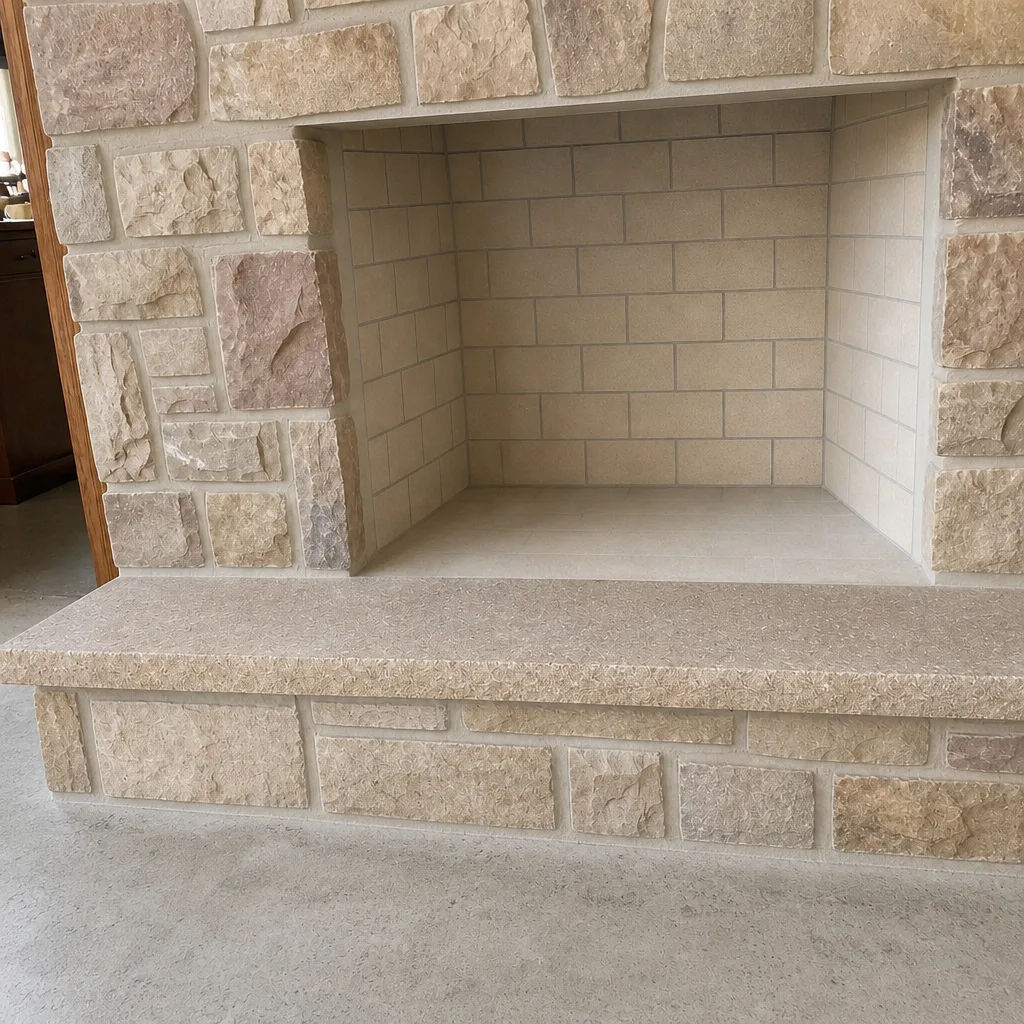
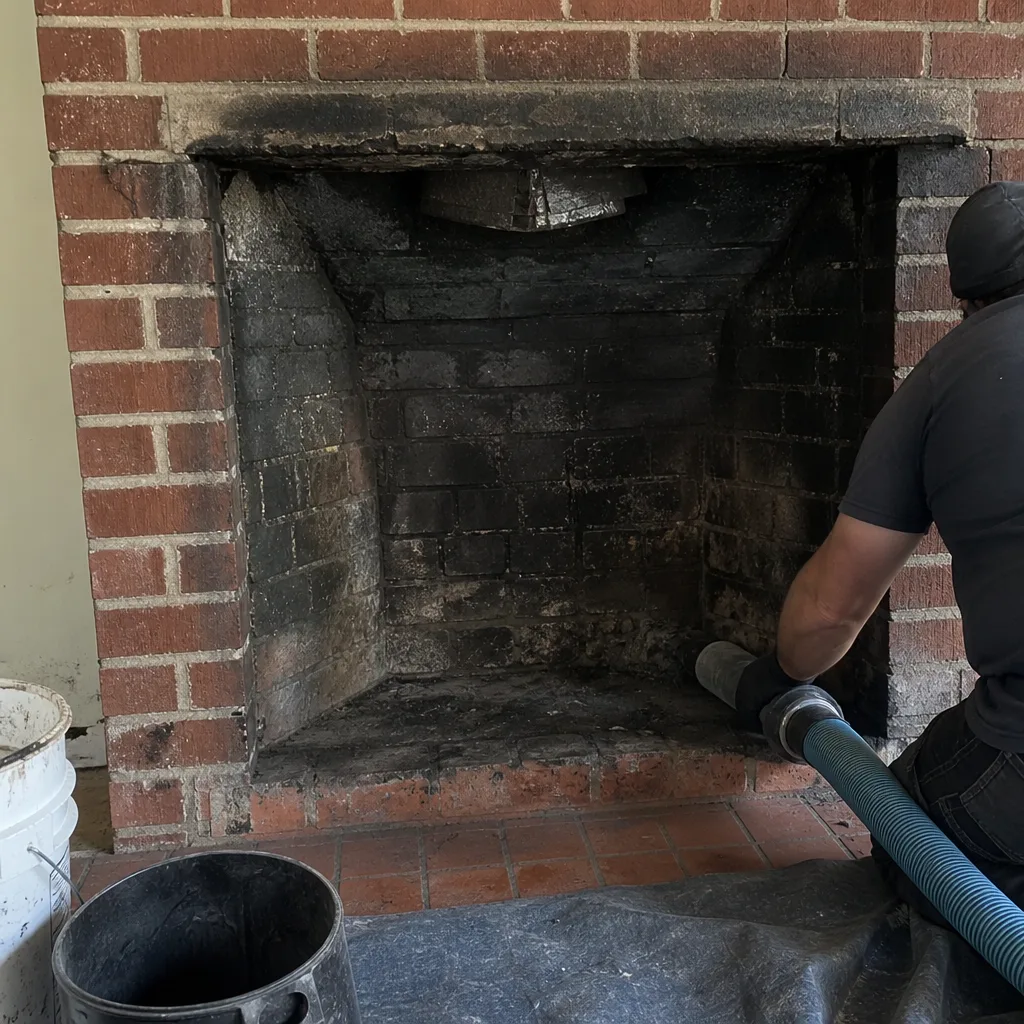
See the difference
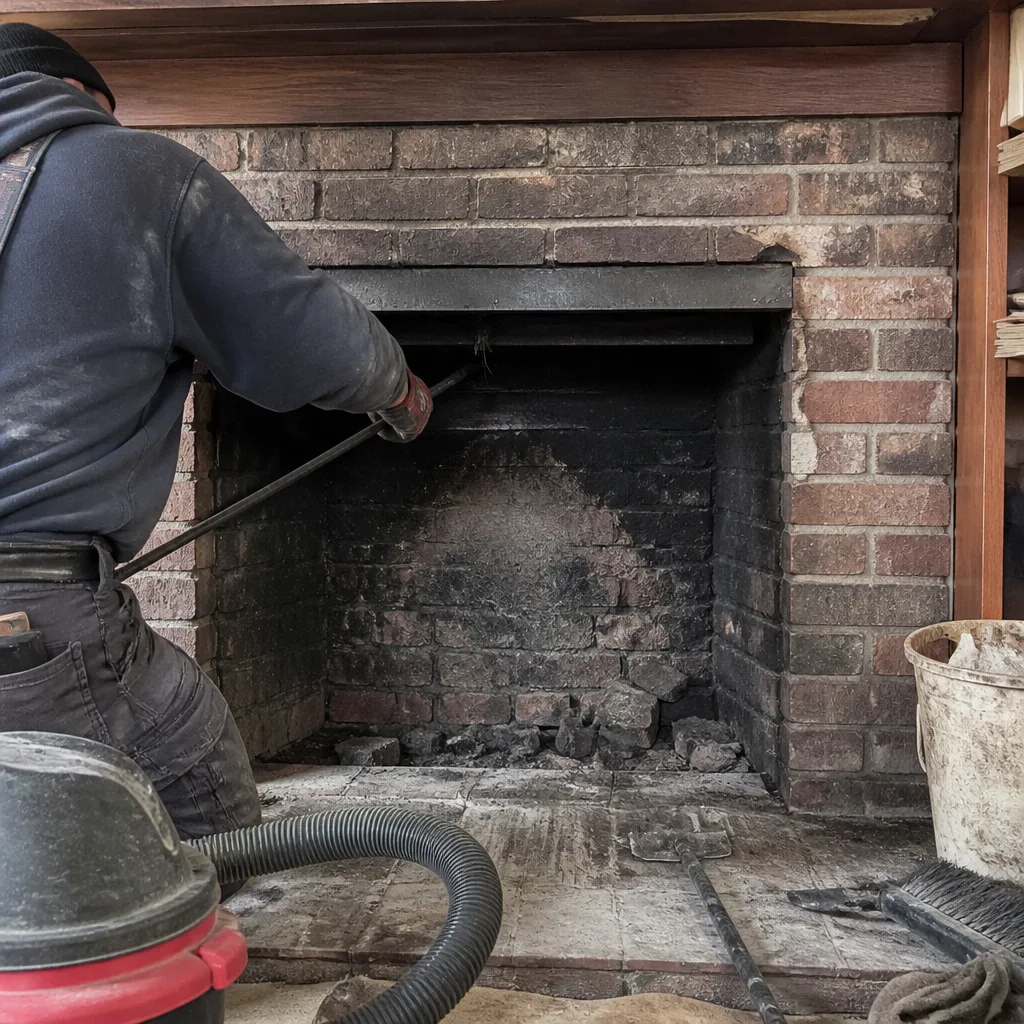 Before
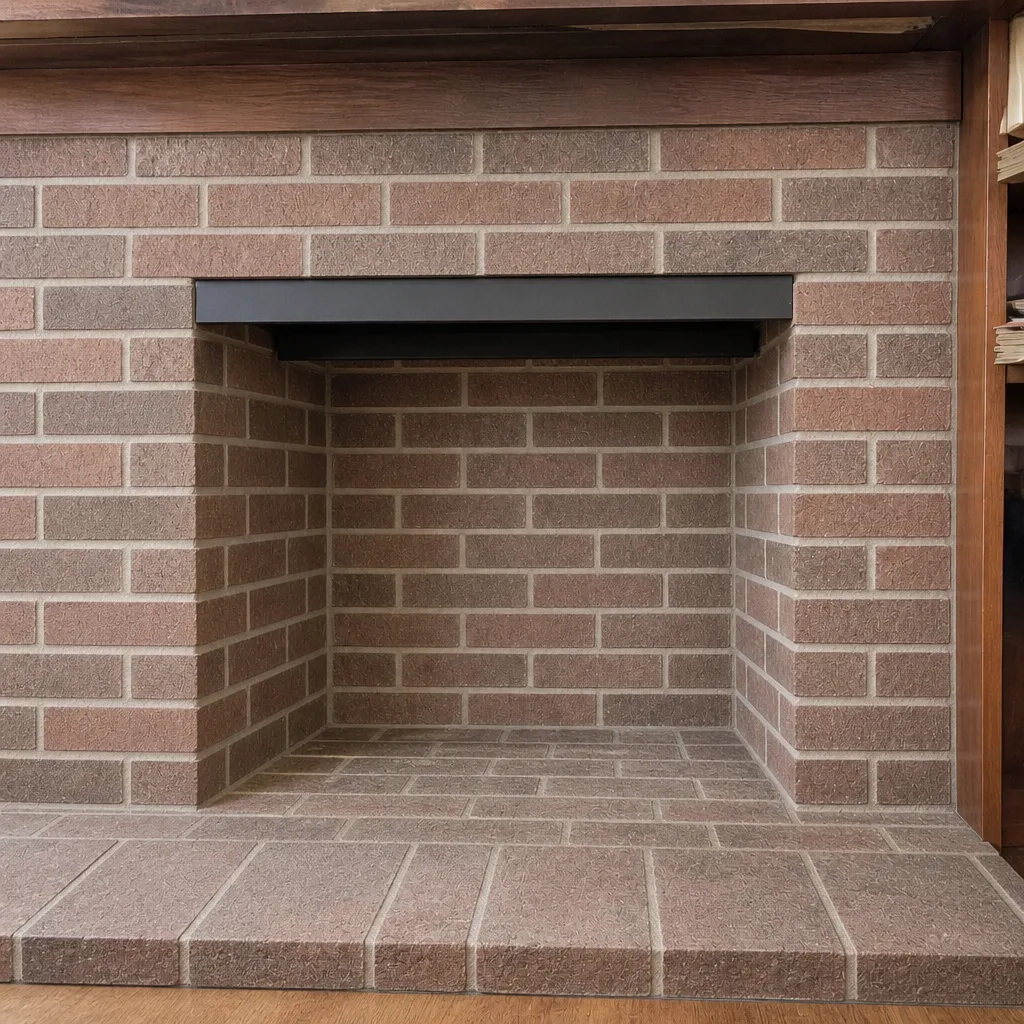 After
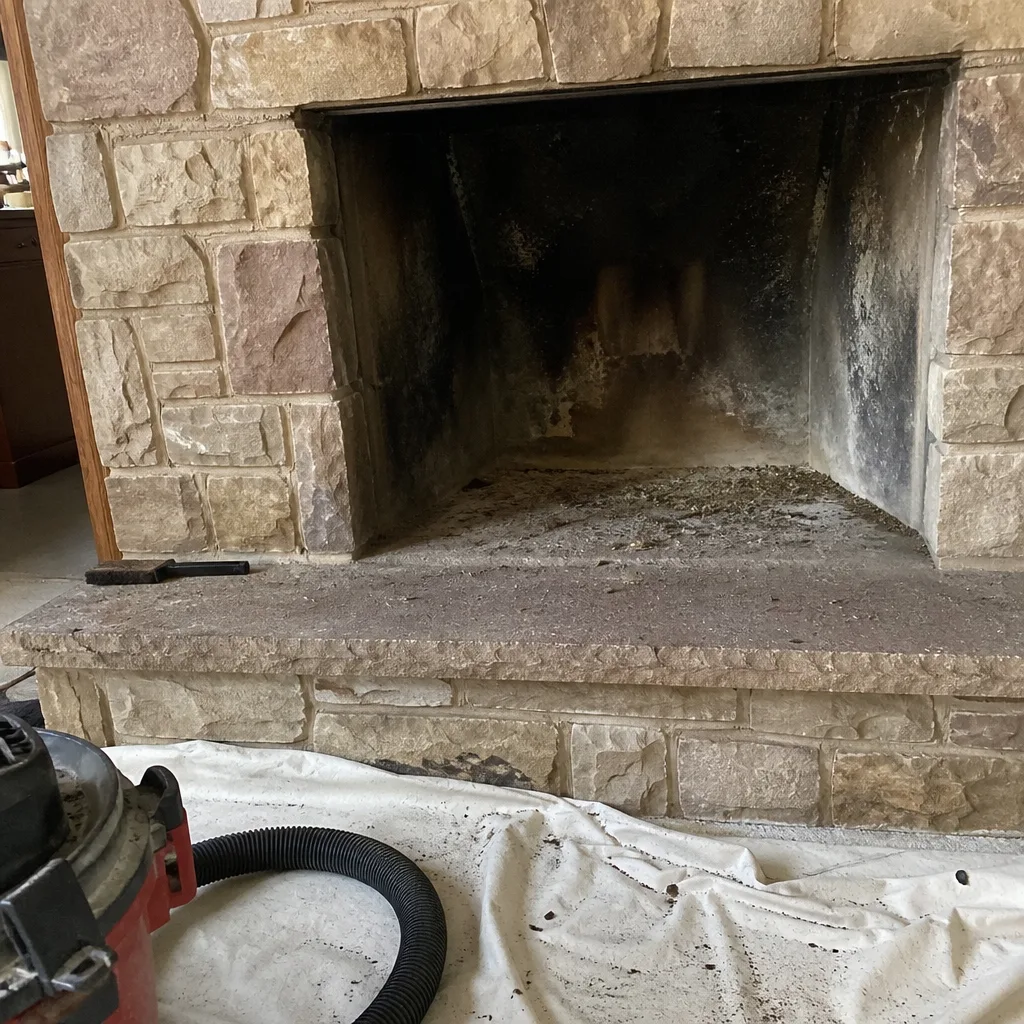 Before
 After
 Before
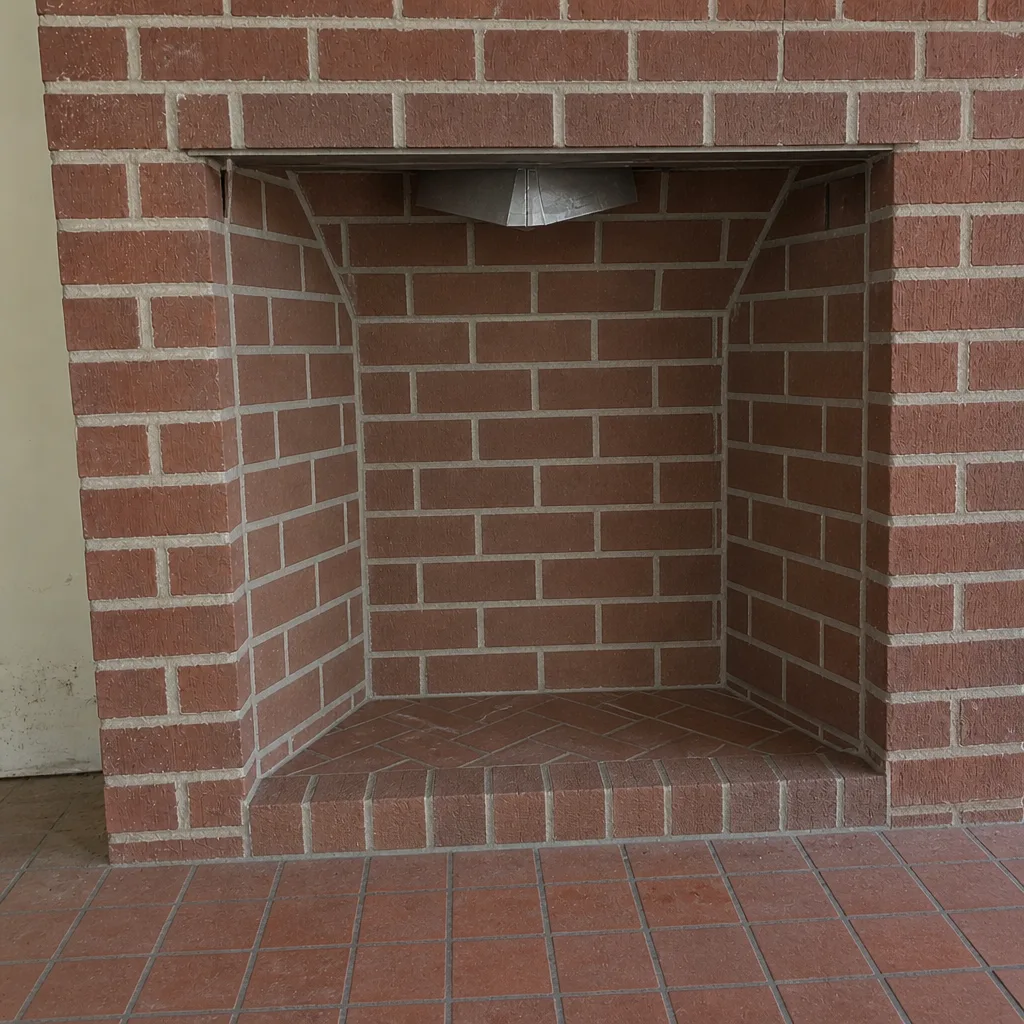 After
Common Mistakes to Avoid
- Assuming efflorescence is cosmetic. The white staining is a moisture signal, not a stain. It means water is moving through the masonry, and left alone it widens cracks that lead to the flue liner. Treating it cosmetically with a cleaner doesn’t stop the water cycle behind it.
- Sweeping or repairing a chimney without a camera inspection. A brush visit that doesn’t include a camera can’t confirm whether the liner is intact. In Milwaukee, a lot of “it looked fine last year” chimney calls would have been caught a season earlier with a photo report of the inside of the flue.
- Burning unseasoned wood to save on cost. Wet wood runs cold, and a cold flue condenses more creosote. The saved dollars on wood don’t come close to the added risk of glaze buildup in the liner. Dry wood is the single biggest controllable variable in chimney safety.
- Ignoring a damper that won’t open fully. A partially sealed damper sends smoke into the living space and pushes pressure changes through the system. It’s a small repair that prevents a much larger one, and it’s often caught during a routine sweep.
- Skipping the exterior check after cold snaps. The two days after a hard freeze are when new efflorescence, new spalling, and new crown cracks are easiest to spot. Walk the yard and photograph the chimney. It takes five minutes and gives you a full season of useful comparison.
- Hiring a generalist to patch what a chimney specialist should diagnose. A handyman can mortar a crown, but a handyman can’t tell you whether the flue liner behind the crown is intact. Patching the exterior without checking the inside is how a cosmetic fix hides a real problem.
- Putting off a first inspection in a newly purchased home. The buyer’s inspection usually covers the visible exterior and the firebox, not the flue. A first sweep and inspection closes that gap, and in a Milwaukee winter it’s worth doing before the first fire of the season.
When to Call a Professional
Call a professional today if you see smoke rolling back into the room, flames at the top of the chimney, a strong and persistent creosote smell in living areas, or any sign of soot staining at the cap. These are stop-use signals. Call within a few weeks for efflorescence, spalling brick, a rusted or missing cap, mortar joint gaps, or any draft or damper change that’s appeared since the last fire season. Also call if you bought a Milwaukee home and don’t know when the chimney was last inspected, because that gap in history is worth closing before the first cold snap. Milwaukee Chimney Sweep offers free estimates in Milwaukee. Call (855) 935-4194. We answer 24/7. Fast dispatch from 7am to 7pm, Sunday through Friday.
Frequently Asked Questions
You need cleaning now if you smell a strong creosote odor inside the house, see smoke roll back into the room, or hear a roar from the flue that doesn’t match the fire. Any of those three means stop burning and call for service. Otherwise, a yearly sweep during the cold season is the standard baseline for wood-burning households in Milwaukee. Call (855) 935-4194 for an exact quote – estimates are free.
The white stain (efflorescence) means water is moving through the brick or mortar and leaving mineral salts at the surface. It’s a moisture signal, not a cosmetic one, and in Milwaukee it often appears one to two freeze-thaw cycles before a liner crack becomes visible. It’s on the schedule-service side of the triage line, not the stop-use side, but it shouldn’t be ignored through a winter. Call (855) 935-4194 for an exact quote – estimates are free.
You can remove light flaky creosote with the right brushes, but you can’t see whether the liner is intact or whether the smoke chamber needs attention. A camera inspection is what tells you which problem you’re looking at. Milwaukee Chimney Sweep provides sweep, inspection, and repair under one accountable scope, so the diagnostic visit and the fix are handled together. Call (855) 935-4194 for an exact quote – estimates are free.
A cold-start backdraft is normal on the first fire of a cold morning, because the flue has to warm up before it drafts. If the fireplace used to draw well and now backdrafts consistently, the flue has a physical change, often creosote buildup, a partial obstruction, or a liner that’s lost integrity. Camera inspection tells the difference. Call (855) 935-4194 for an exact quote – estimates are free.
Many damaged liners can be restored with HeatShield ceramic resurfacing instead of a full relining. That’s a real cost difference, and it’s why we don’t recommend a liner on a hunch. When the flue is a candidate for resurfacing, we’ll say so. When a full relining is the right call, DuraFlex flexible liner systems and Olympia Chimney hardware are part of the material we work with. Nothing is recommended without camera evidence you can see for yourself. Call (855) 935-4194 for an exact quote – estimates are free.
A chimney that burns wood should be swept once a year in most cases, and Milwaukee’s cold season makes yearly sweeping the right baseline because the cooler flue runs condense more creosote. A chimney that’s burned through a hard season with unseasoned wood may need a check sooner. If you can’t remember the last sweep, book the first one as a baseline visit. Call (855) 935-4194 for an exact quote – estimates are free.
The Bottom Line
Chimney warning signs split cleanly into two groups: symptoms that mean stop today, and symptoms that mean schedule service before the next cold snap. Smoke rolling into the room, visible fire at the flue top, and a persistent creosote smell in the living space are stop-use signals. Efflorescence, spalling brick, crown cracks, a rusted cap, and mortar gaps are schedule-service signals, but they matter because the freeze-thaw cycle turns them into liner problems over one or two Milwaukee winters. The best defense is a yearly sweep with a camera inspection, and the fastest path to a real answer is a visit that can diagnose and repair in the same call.
If you’ve noticed any of the signals in this guide, call us. Milwaukee Chimney Sweep provides sweep, inspection, and repair under one scope, with HeatShield resurfacing as an alternative to full relining when the liner is a candidate. We show up with the right material for the job, not just a brush. Call (855) 935-4194. We answer 24/7. Fast dispatch from 7am to 7pm, Sunday through Friday.
Written by the team at Milwaukee Chimney Sweep.